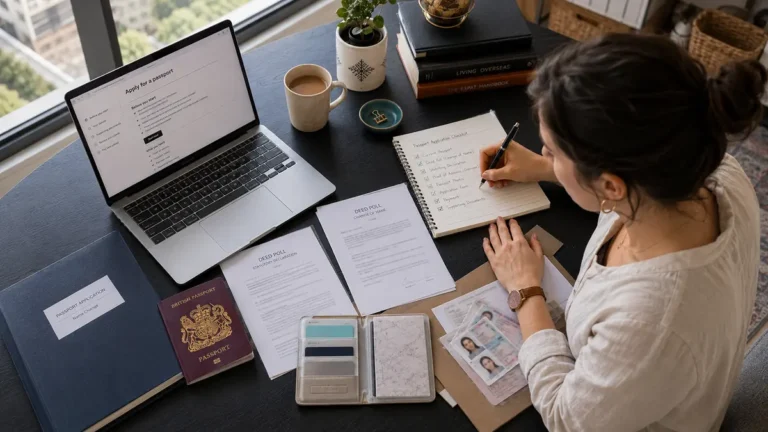
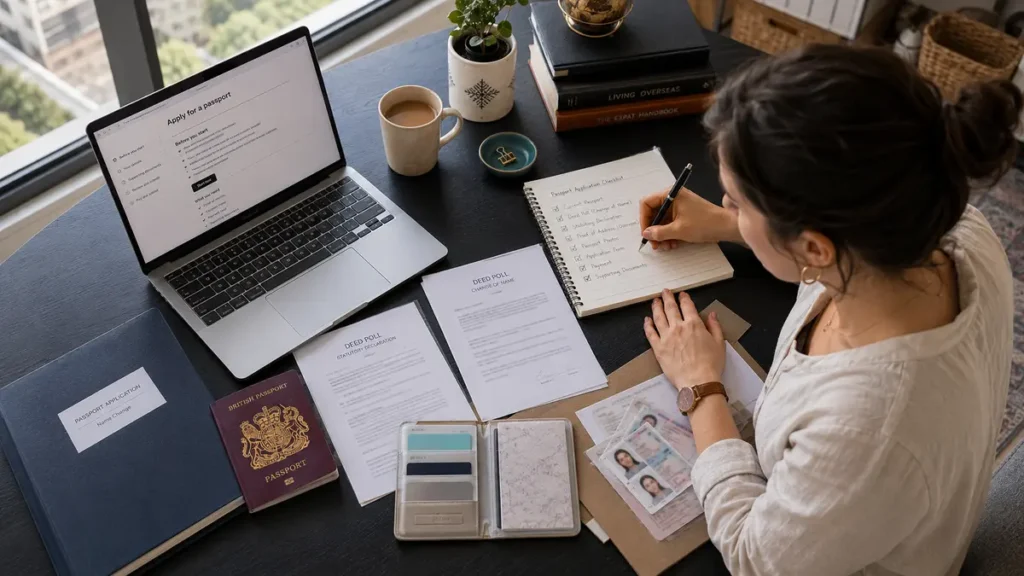
If you have recently changed your name, you may suddenly notice something you had not thought about before: your signature.
Perhaps your old signature contains your previous surname. Maybe you recently married, divorced, changed your name by deed poll, or simply decided that your existing signature no longer feels appropriate.
That often leads to one very practical question:
Can I change my signature after changing my name?
In the UK, the short answer is generally yes. Changing your legal name and changing the way you sign are related, but they are not exactly the same process. A change of name may require evidence such as a marriage certificate, deed poll, statutory declaration or other accepted documentation depending on the organisation involved. GOV.UK describes a deed poll as a legal document that proves a change of name.
Your signature, on the other hand, is the mark you normally use to identify yourself and approve documents. Passport Office guidance specifically recognises the signature a customer uses for official purposes, even where the signature itself may not obviously match the person’s written name.
So, if you are wondering whether you can change your signature after changing your name, this guide explains what you need to know and how to make the transition as smoothly as possible.

Can I Change My Signature After Changing My Name?
Yes. You can generally start using a new signature after a name change.
There is no requirement that your signature must be a perfectly readable version of your full legal name. In fact, many people’s signatures are stylised, shortened, based on initials or difficult to read.
HM Passport Office guidance acknowledges that signatures can be difficult to compare with a person’s written name. What matters in relevant passport processes is whether the signature is the one the person uses for official purposes.
This means changing your surname does not automatically force you to create a completely different signature.
You could:
- continue using a similar signature
- adapt your existing signature to your new surname
- use your new initials
- create a completely new signature
- simplify your signature
- develop a more stylised version of your new name
The important practical consideration is consistency.
Once you decide on a new signature, it makes sense to use it consistently when updating important accounts and signing official documents.
Do I Have to Change My Signature After Changing My Name?
Not necessarily.
One of the most common misconceptions about changing a name is that your signature must immediately change as well.
That is not always the case.
For example, imagine your old name was:
Emily Carter
and your signature was simply:
EC
If your new surname becomes Wilson, you might decide to change your signature to EW.
But if your existing signature is an abstract mark that does not clearly spell “Carter”, you may prefer to keep it.
The question is therefore less about whether you must change your signature and more about whether changing it would make your personal records clearer and more consistent.
If your existing signature clearly contains your old surname, creating a new signature after changing your name can often reduce confusion when dealing with banks, employers, government organisations and other institutions.

Can I Change My Signature After a Deed Poll?
Yes. Changing your signature after completing a deed poll is perfectly understandable.
A deed poll is evidence of your change of name. GOV.UK explains that people aged 16 or over can make an unenrolled deed poll, while adults aged 18 or over can apply to have a deed poll enrolled through the High Court. Different organisations can have their own requirements regarding the evidence they accept.
The deed poll deals with your name.
Your new handwritten signature is a separate practical matter.
So if you have completed your deed poll and want to begin signing documents using a signature based on your new name, you can normally do so.
Should My New Signature Match My New Name?
It does not have to be a perfectly readable match.
A signature is often highly stylised. It could contain:
- your full name
- your first initial and surname
- both initials
- part of your surname
- a shortened handwritten mark
- a distinctive personal flourish
Official Passport Office guidance makes clear that a signature may be accepted even where it does not visibly match the person’s written name, provided it is confirmed as the signature used for official purposes.
That said, after changing your name, using a signature that relates in some way to your new identity may make things easier for you personally.
Changing Your Signature After Marriage
Marriage is probably one of the most common situations in which someone thinks about changing both their surname and their signature.
If you take your spouse’s surname or adopt a combined surname, you may naturally want a new signature too.
For example:
Before marriage:
Sophie Taylor
After marriage:
Sophie Williams
You might decide to redesign your handwritten signature around “S Williams” rather than continuing to write “S Taylor”.
Importantly, GOV.UK states that you do not normally need a deed poll simply to take your spouse’s or civil partner’s surname. A marriage or civil partnership certificate can be provided to record-holders when updating the name.
Once you begin changing your records, you can also begin introducing your updated signature where required.
Changing Your Signature After Divorce
A similar situation can arise following divorce or the end of a civil partnership.
You may decide to return to a previous surname and want your signature to reflect that change.
GOV.UK notes that organisations may accept documents such as a marriage certificate together with a decree absolute, or the relevant civil partnership documents, when someone returns to a previous name. Some organisations may still request a deed poll.
If your legal or commonly used name changes again, you can also create a signature that fits the name you now use.
Should I Update My Passport Signature After Changing My Name?
Your passport deserves particular attention because name changes involve a formal application process.
For certain passport name changes, GOV.UK states that accepted evidence can include a deed poll, statutory declaration or affidavit together with proof of previous name changes and evidence that you are using the new name.
HM Passport Office also has specific guidance for signatures. For paper applications, staff may ask whether the signature shown is the signature you use for official purposes. If you confirm that it is, the guidance says it can be accepted in the relevant circumstances.
If you are changing both your name and the style of signature you use, make sure you follow the instructions on your particular passport application carefully rather than assuming the procedure is identical to another organisation’s process.

What About My Driving Licence?
Your driving licence is one area where changing your name or signature can affect the application route.
For Great Britain, GOV.UK says that if your signature has changed, you cannot use the standard online renewal process and must apply by post or at a participating Post Office. If your name or title has changed, the renewal must be completed by post.
For a name change, DVLA instructs drivers to send their existing licence, the appropriate application form and original documents confirming the new name.
There is a different process for Northern Ireland.
This is why it is worth checking each organisation individually when you update your signature after a name change.
Should I Tell My Bank That My Signature Has Changed?
It is sensible to check directly with your bank or financial provider.
Banks can have their own security processes for updating names, signatures and identity records. Avoid assuming that changing your name with one government department automatically updates your information everywhere else.
When contacting your bank, explain clearly that:
- your name has changed;
- you have evidence of the name change; and
- you also want your usual signature updated if necessary.
Keep your original name-change documents safe, as different organisations may ask to see appropriate evidence.
GOV.UK specifically advises checking with individual organisations to understand which form of deed poll or proof of name change they will accept.
How to Create a New Signature After Changing Your Name
There is no need to make your new signature complicated.
A good signature should be something that feels natural enough for you to reproduce consistently.
Step 1: Write Your New Name Normally
Start by writing your new full name several times.
Do not worry about making it look impressive.
You are simply discovering which letters naturally flow together.
Step 2: Experiment With Initials
Try combinations such as:
- first initial + surname
- first name + surname initial
- both initials
- abbreviated first name + surname
If you have a long surname, initials may make your signature quicker to use.
Step 3: Keep It Repeatable
A very complicated signature may look attractive once but become frustrating if you have to reproduce it regularly.
Choose something you can sign comfortably on:
- forms
- contracts
- delivery documents
- financial paperwork
- workplace documents
Step 4: Practise It
Write the signature repeatedly until it begins to feel natural.
This is especially helpful if you have spent many years signing your previous surname without thinking about it.
Step 5: Start Using It Consistently
Once you are comfortable with your chosen signature, begin using it consistently when relevant organisations update their records.
Which Organisations Should I Update After Changing My Name?
A name change can involve considerably more than your signature.
Depending on your circumstances, you may need to review records held by:
- HM Passport Office
- DVLA
- banks and credit providers
- your employer
- pension providers
- insurance companies
- utility companies
- mortgage or rental providers
- professional organisations
- educational institutions
- healthcare providers
- subscription and membership services
Your exact list will depend on your personal circumstances.
For Home Office identity documents, current guidance emphasises evidence linking the previous and acquired names and, in relevant cases, evidence that the new identity is being used for all purposes.
Update Important Records First
A practical approach is to start with your core identification and financial records.
Once major identity records reflect your new name, dealing with smaller organisations can often become easier because you have stronger supporting evidence available.
Can I Have Different Signatures?
Technically, handwriting naturally varies, and your signature will never be completely identical every time you write it.
But deliberately using several dramatically different signatures for important official or financial purposes may create unnecessary questions.
For example, if your bank knows one signature while you repeatedly sign important paperwork using an entirely different one, you could be asked to verify your identity.
HM Passport Office’s guidance refers specifically to the signature someone uses for official purposes, which highlights the practical value of having a recognisable, consistently used official signature.
Does My Signature Legally Have to Include My Full Name?
A signature does not need to look like neatly written handwriting of your entire name.
Many people use initials, shortened forms or stylised marks.
What matters in practical settings is that the signature functions as your adopted way of signing and that you comply with any specific requirements of the organisation or document involved.
This is another reason the answer to “Can I change my signature after changing my name?” is usually straightforward: your signature can evolve when your name changes, and it does not need to be an exact handwritten copy of the new name.
Common Mistakes to Avoid After Changing Your Name and Signature
Changing Your Signature Repeatedly
Once you settle on a new signature, try not to redesign it every few weeks.
Consistency makes administrative life simpler.
Assuming Every Organisation Updates Automatically
Changing your passport does not mean every private company automatically has your new details.
Update relevant organisations separately where required.
Throwing Away Your Name-Change Evidence
Keep your marriage certificate, deed poll or other relevant documentation secure.
You may need to establish the link between your former and new names when updating records. Passport and Home Office guidance both require supporting evidence in various name-change circumstances.
Using Your New Name Without Checking Important Records
For everyday situations this may cause little trouble, but travel, finance, employment and government records deserve more attention.
Make sure you understand the particular organisation’s requirements.
Frequently Asked Questions
Can I change my signature after changing my surname?
Yes. If you have changed your surname, you can choose a new signature that reflects your new name. You may also be able to keep a stylised existing signature if it remains the signature you normally use, subject to any organisation-specific requirements.
Do I need a deed poll to change my signature?
A deed poll proves a change of name; it is not simply a certificate for redesigning your handwriting or signature. GOV.UK describes a deed poll specifically as a legal document proving a change of name.
Can I change my signature after marriage?
Yes. If you take a new surname after marriage, you can create and begin using a new signature based on that surname.
Can my signature still use my old initials?
A stylised signature does not necessarily have to spell out your legal name. However, if your old initials make your signature confusing when dealing with important organisations, updating it may be more practical.
Do I need to notify DVLA if my signature changes?
DVLA’s current Great Britain renewal guidance specifically states that where your signature has changed, you must apply for renewal by post or at a Post Office rather than through the normal online renewal service. Name changes must be handled by post.
Does my passport signature have to match my name exactly?
HM Passport Office guidance recognises that a signature may be difficult to compare directly with a person’s name. In relevant paper applications, the key question is whether it is the signature the applicant uses for official purposes.
Final Thoughts: Changing Your Signature After a Name Change
So, can I change my signature after changing my name?
Yes — in most everyday UK circumstances, you can choose to use a new signature after changing your name.
Your name-change documentation establishes your new name. Your signature is the mark you adopt when signing documents.
You do not necessarily have to abandon your old signature simply because your surname has changed. But if your existing signature strongly reflects your former name, changing it can make your records feel more consistent and may reduce confusion.
The best approach is simple:
Choose a signature you like, make sure you can reproduce it comfortably, use it consistently for important purposes, and follow the specific procedures of organisations such as HM Passport Office, DVLA, banks and other record-holders when updating your details.
Most importantly, treat your name change and your signature change as two connected but separate administrative issues.
If your legal name has changed, make sure your important records are updated correctly. Then, if you want your signature to change with your name, choose one that represents your new identity and use it consistently.
This article provides general information for UK readers and is not a substitute for personalised legal advice. Requirements can vary by organisation and circumstances.